
The Centre has received Rs 6,651 crore as interim dividend from 12 public sector undertakings (PSUs) on Monday, edging towards its Rs 50,028 crore dividend target for the ongoing fiscal. Power Grid Corporation of India (PGCIL) has transferred Rs 2,506 crore as a dividend tranche to the government, while NMDC and Nuclear Power Corporation of India transferred interim dividend of Rs 1,605 crore and Rs 972 crore, respectively. The government has received dividend tranches of Rs 913 crore from GAIL, Rs 351 crore from Hindustan Aeronautics, Rs 149 crore from Bharat Electronics, among others, Department of Investment and Public Asset Management (DIPAM) secretary Tuhin Kanta Pandey tweeted.

The Tata group companies are now more valuable than all the listed central public sector undertakings (CPSUs) or companies in the country. The key 20 listed Tata companies ended the 2021 calendar year with a combined market capitalisation of Rs 23.36 trillion, ahead of the 70 listed CPSUs, which had a combined m-cap of Rs 23.2 trillion. In comparison, these CPSUs had a combined market capitalisation of Rs 16.7 trillion at the end of December 2020 against the Tata group firms' combined m-cap of Rs 15.7 trillion.

The Centre has conceded most of the demands of potential buyers of Neelachal Ispat Nigam Ltd (NINL). These include lowering the lock-in period for sale of assets to one year and allowing the new buyer to undertake the amalgamation of a special purpose vehicle (SPV) into NINL. An inter-ministerial group led by Department of Investment and Public Asset Management (Dipam) secretary Tuhin Kanta Pandey and the core group of secretaries on divestment (CGD) headed by Cabinet secretary Rajiv Gauba have decided that the lock-in period can be reduced to one year from the date of completion of sale, from the earlier three years proposed by Dipam, an official in the know said.

'The government will take proactive steps to see that their participation in the equity market, especially in PSU stocks, is rewarding.'

India's top listed companies reported their best-ever quarterly net profit of Rs 2.39 trillion in the September quarter of FY22, up 46.4 per cent year-on-year. The earnings were driven by a big surge in the profitability of banks, non-banking financial companies & insurance (BFSI), oil & gas, and metal & mining firms. The combined net profit of these three cyclical sectors were up 87 per cent YoY to a record high of Rs 1.53 trillion, up from Rs 82,000 crore a year ago and Rs 1.08 trillion in Q1FY22.
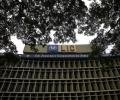
Taking a cue from Zomato's stellar initial public offering (IPO), through which it garnered a valuation of Rs 1 trillion, the government has asked its advisors and valuers to ascertain if the Life Insurance Corporation of India (LIC) should be valued at Rs 10 trillion or more. The government is looking to offload about 10 per cent stake in LIC through the IPO. At that valuation, the government stands to net at least Rs 1 trillion from LIC's proposed IPO, which will boost the Centre's efforts to meet its disinvestment target of Rs 1.75 trillion for the current financial year.

Post handing over of Air India to the Tatas, government officials will be free to book their travel with any airline that offers them the best price. And, the Centre will not have a tie up with any carrier, department of investment and public asset management (DIPAM) secretary Tuhin Kanta Pandey said. "The government is not mandating travel by any particular airline, going forward, after handing over Air India because there won't be any state-owned airline," he said. The department of expenditure (DoE) will soon issue instructions to government departments for official travel as this needs to be done before handing over Air India to the new buyer, he said.

The mandatory use of the Indian flag on SCI's ships has been a bone of contention with prospective buyers, on account of the costs it will entail in terms of taxation and vessel registration.

'The business continuity clause will mean the Tatas will have to keep running the airline for three years, and cannot exit the flying business.'

The Centre's push to sell Air India on priority has led to delays in other strategic divestment proposals, such as privatising United India Insurance, as well as ongoing transactions, such as Shipping Corporation of India (SCI) and Bharat Petroleum Corporation (BPCL), revealed multiple officials involved in the process. The Department of Investment and Public Asset Management (DIPAM) is yet to take new privatisation recommendations of the NITI Aayog to the core group of secretaries on disinvestment (CGD) headed by the Cabinet secretary, said one of the officials. The priority now is to ensure all approvals for Air India are in place since the government intends to hand over the national carrier as early as this month.

The government is set to initiate consultations with the Reserve Bank of India (RBI) to devise a new security clearance framework for screening potential bidders of public sector banks (PSBs) as it kick-starts the privatisation process, beginning with the strategic divestment of IDBI Bank. As the government is moving ahead with strategic divestment of IDBI Bank and is looking to privatise two PSBs, the Department of Investment and Public Asset Management (DIPAM) is looking to put in place an appropriate framework as the potential buyers will have to meet the RBI's fit and proper criteria, said an official. The process of bank privatisation would be different from the sale of any other public sector undertaking (PSU), and more restrictions and measures will have to be put in place, the official said.

After 'mutual funds sahi hai', it could be the turn of something like 'stock market sahi hai'. Ahead of what will be India's biggest initial public offering, expected later this year, the government and the insurance major are planning a high-decibel awareness campaign for retail investors to ensure their participation in large numbers. "It may be along the lines of the highly successful campaign on mutual funds," an official privy to the developments said. The campaign will mainly target investors in tier II and tier III cities, and will be organised through the vast network of LIC agents to make the policyholders aware about investing in stock markets.

The government has tweaked the income tax laws to make it easier for the new owners of loss-making public sector undertakings (PSUs) to carry forward the accumulated losses and set them off against future profits. This will result in significant tax savings for the new owners if they are able to turnaround operations of the ailing PSU within a few years. This will, in turn, boost the post-tax earnings and returns for the new owners.
The government is looking to sell shares of Reliance Industries (RIL) held through Specified Undertaking of the Unit Trust of India (SUUTI) and is soon going to appoint an intermediary to manage it. The plan is to sell about 8 lakh shares of RIL that will help the government garner around Rs 180 crore. The Department of Investment and Public Asset Management (DIPAM) will appoint an intermediary that will act as a custodian of these shares. The intermediary, based on its market analysis, will offload these shares at the best price, said an official. A final approval on the proposal is expected soon.

The government has used four methods to value the assets that it is looking to monetise under its Rs 6-trillion National Monetisation Pipeline (NMP). The value of the assets on the block is indicative that the government is expected to realise either in the form of upfront accruals or by the way of private sector investment, NITI Aayog said in its report. Valuations are essentially estimates, so multiple methodologies are useful to get a range, said Manish Agarwal, infrastructure expert and co-founder of AskHowIndia.org. Different valuation methodologies depend on the different assumptions that are being considered for valuing a business, he said.
The government and the Life Insurance Corporation of India (LIC) are planning a campaign to give a big push to participation by retail investors, that includes opening of demat accounts for policyholders in IDBI Bank, in the run-up to its initial public offering (IPO). The campaign will aim to make retail investors as well as LIC policyholders aware of India's largest public offering, said an official. In an effort to give LIC policyholders a chance to own a part of the insurance company, the government has reserved 10 per cent of the issue of IPO for its policyholders.

Sixteen merchant banks are in the fray to act as book running lead managers (BRLM) for the initial public offering of Life Insurance Corporation of India (LIC). These merchant banks will have to make a presentation before the Department of Investment and Public Asset Management (DIPAM) on August 24-25. The shortlisted banks are BNP Paribas, Citigroup Global Markets India, BofA Securities, Goldman Sachs (India) Securities, HSBC Securities and Capital Markets(India), J.P. Morgan India, Nomura Financial Advisory and Securities (India), Axis Capital, DAM Capital Advisors, HDFC Bank, ICICI Securities, IIFL Securities, JM Financial, Kotak Mahindra Capital, SBI Capital Market, and Yes Securities India.
After the hit of the pandemic, India Inc is now worried about the adverse impact of inflation and higher commodity prices on their revenues and margins. The inflation scare is the strongest among manufacturers of consumer goods such as automobiles, consumer durables, and fast-moving capital goods (FMCG). Companies across sectors fear they will not be able to pass on the hike in input costs to their consumers due to weak demand, which, in turn, would lead to a hit on margins and profitability in the forthcoming quarters.

Its production declined for the third consecutive year in financial year 2020-21 (FY21) to an 11-year low, while sales volume contracted for the second year to the lowest since FY15. The company manufactured around 1.08 million vehicles last fiscal, a decline from 1.17 million the previous year, and a steeper fall from its all-time high tally of 1.62 million reported in FY18.

After outperforming the broader market and their public sector peers for the better part of the post-Lehman period, private sector banks - such as HDFC Bank, ICICI Bank, Axis Bank, and Kotak Mahindra Bank - are now underperforming. Last week, the Nifty Private Bank index was up just 6 per cent year-to-date in the calendar year 2021, against nearly 13 per cent rally in the Bank Nifty and a 15 per cent rise in the benchmark Nifty50. Public sector (PSU) banks, such as State bank of India, Bank of Baroda, and Punjab National Bank, are now rally leaders and outperforming the broader market. The Nifty PSU Bank index was up 42 per cent since the beginning of this calendar year. But on a longer term, the Nifty Private Bank index is up 101 per cent since March 2016, against a 118 per cent rally in the Bank Nifty and just 2 per cent rise in the Nifty PSU Bank index in the period.
 © 2026 Rediff.com - Investor Information - Advertise with us - Disclaimer - Privacy Policy - Sitemap - Feedback - About us - Terms of use - Grievances